
Presented by:
Triple D's
Liz Cooper
Liz Cooper
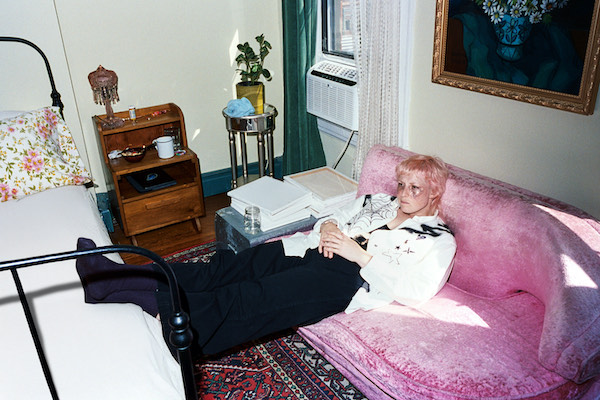
The thing about finding yourself is there's always another corner to turn. The Vermont-based singer/songwriter Liz Cooper made her third album during a period of intense self-discovery and reinvention. She moved to New York for the first time, weathered a pandemic, came out to herself after falling in love with a friend, and experienced her first queer relationship and breakup, all in the course of a few years. New Day marks both a personal and a musical revolution for Cooper – a plunge into psychedelic pop depths and a fullhearted reflection of a whirlwind chapter in her life. These songs scintillate with the kind of self-confidence that only beams through after you've aimed a sharp gaze inward and realized that whatever you see will always keep darting ahead of you.In making New Day, Cooper radically overturned her habitual approaches to making music. Rather than writing with a full band behind her, she recorded demos alone in her apartment, learning day by day to trust herself as she forged her new sound. “I needed to show up for myself to finish writing something that felt impossible,” Cooper says. “New York really challenged me to become a better writer, artist, and person. Living there made me ask myself, why am I making this? Why am I doing any of this? What's the point? I was tired of being pigeonholed as a guitar player and Americana artist. I needed to follow my own creative bliss.” While recording, Cooper assumed production duties for the first time in her career, which enabled her to work bold new textures into each song. Together with co-producer Dan Molad (Lucius, JD McPherson), she wrung entirely new sounds out of her guitar with studio equipment she’d never tried before. For the album’s bristlingly optimistic title track, Cooper ran her guitar through a Kaoss pad synthesizer while Molad captured the sound by swinging a microphone around the room. They visited the War on Drugs’ studio to record feedback from Marshall amplifier stacks. Rather than focusing solely on composition and performance, Cooper took a sculptural and procedural approach to production. “Instead of writing my guitar parts note by note, I was experimenting on the spot,” she says. “It opened my mind up – and it felt really good.”Despite its boisterousness and verve, New Day was originally born in a quiet place. After nearly a decade of living in Nashville, where she'd moved at age 19, Cooper relocated to Brooklyn in February of 2020. She had expected to stay on the road as a touring musician as she'd done for years, but the pandemic soon upended the industry and shuttered venues indefinitely. Confined to her neighborhood and her apartment, Cooper sought out new ways to keep making music. A longtime guitarist who found her first musical home in Nashville’s Americana scene, Cooper taught herself to play the piano during lockdown, opening up brand new creative channels outside her usual writing practices. She didn't have to worry about disturbing her neighbors with an amplified electric guitar, and the process of learning an instrument while simultaneously writing on it unearthed an almost childlike sense of discovery. The piano proved to be a loyal friend during a profoundly alienating time. "It felt like someone I could lean on – like the piano was my voice when I couldn't talk or sing," says Cooper.As songs started to trickle out, Cooper flew back and forth to Los Angeles to record with Molad, who engineered her 2021 album Hot Sass. The first song they recorded together was the riotous new wave number "Boy Toy," where Cooper fully ignites her confidence as an openly queer performer. "I wrote 'Boy Toy' the night before we went into the studio. It was totally random, not at all planned," says Cooper. "I met up with my friend Caroline Kingsbury, and we were like, Let’s make a fun song that’s just super direct and sexy and big. It felt so powerful and free to start there."Over time, Cooper built out the songs she had written and demoed in New York. Slow and sparse sketches became big, buoyant anthems. She looked to early Beck records for inspiration as she crafted New Day's crisp, high-contrast sound. On the album's lead single and title track, fuzz bass churns underneath twinkling synths and binaural backing vocals. Piano and strings take center stage on the swelling "IDFK," one of many songs inflected by Lou Reed's classic album Coney Island Baby, which Cooper played on repeat while living in Brooklyn. The bittersweet "Sorry (That I Love You)" conjures the extremes of a troubled relationship over warm, vintage-toned guitar and bass, while closer "Baby Steps" wraps the album on a hopeful note: "I've made mistakes / I'm only human / These baby steps / Lead me to you," she sings at the love song's sweetly irresistible hook. "I struggled so much while writing this record," Cooper says. "I felt like I wasn’t allowed to come out – I was dealing with a lot of internalized homophobia. Celebrating my queerness and understanding who I am has been a long process. Every day is a new day of coming out to myself and to everyone around me. I’m very proud to be making music that feels honest to me and my experience."No matter how many times you change, no matter how many hours you commit to improving yourself, each new phase in a life is still only a prelude to the next one. With New Day, Cooper captures the unfurling transformations that revealed her to herself – and leaves the door wide open for all the people she's still yet to become.
T. Hardy Morris
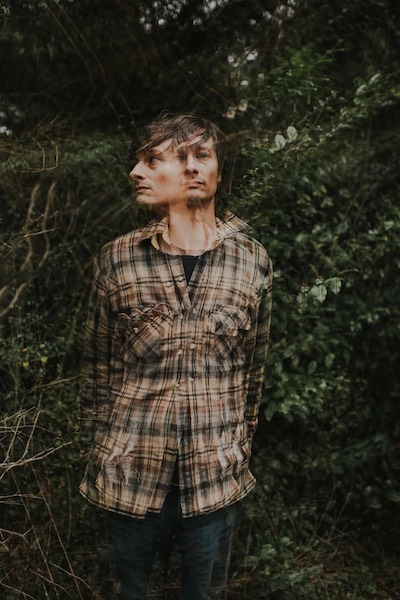
The line between art and entertainment has always been fuzzy. Certainly, there’s plenty of overlap between the two, but lately it feels like there’s a growing divide, an ever-widening chasm separating our fundamental need for creative expression and our insatiable appetite for disposable content. That’s where T. Hardy Morris comes in.“I’ve spent a lot of time parsing the difference between the two,” he explains, “not just for myself, but for society at large. What does it mean to be an artist? How do we measure creative success? Where are the boundaries between audience and performer when everyone’s broadcasting their lives 24/7?”Morris dives into those questions headfirst on his riveting new album, Artificial Tears, and while the answers don’t come easily, the search yields plenty of reward. Recorded in Nashville with My Morning Jacket’s Carl Broemel at the helm, the collection is an electrifying work of existential exploration, a raw, rock and roll reflection on meaning and identity in a modern world that’s simultaneously more connected and isolated than ever before. The performances are blissed-out and hazy here, captured primarily on a four-track tape machine, and Morris’s delivery is subtle and understated to match, fueled by tumbling, stream-of-consciousness lyrics rooted in a dreamy sense of longing and nostalgia. Despite the weighty ruminations at its core, the result is a remarkably grounded, down to earth album that’s at once honest and abstract, a poignant, clear-eyed look in the mirror from a master craftsman committed to his work for nothing more—and nothing less—than its own intrinsic value.“I’ve found a comfort zone for myself over the years writing music and performing when I feel compelled to, when I’ve got something I need to say,” Morris reflects. “The idea of being an ‘entertainer’ day-in and day-out never had much luster for me. I was always drawn to the shadows rather than the limelight.”Born and raised in Georgia, Morris got his start with southern psych-rock/grunge outfit Dead Confederate, which shared bills with the likes of Dinosaur Jr. and R.E.M. in addition to making their national TV debut on Conan. When the band split up, Morris hit the ground running under his own name, releasing his solo debut, Audition Tapes, to widespread acclaim in 2013. Over the course of the next decade, he would go on to release three more similarly lauded solo records, prompting love everywhere from Pitchfork and SPIN to Paste and Billboard and earning dates with the likes of Jason Isbell, Drive-By Truckers, Shovels & Rope, and Shakey Graves. In addition to his steady solo output and rigorous tour schedule, Morris also found time to record a pair of albums with the freewheeling side project Diamond Rugs, which featured members of Deer Tick, Los Lobos, and The Black Lips.“Everything was pretty tumultuous leading up to my most recent record [2021’s The Digital Age of Rome],” Morris recalls, “but it felt like there was a return to some kind of normalcy for a couple years after that. I was just living day to day, writing and watching my kids grow up. It gave me a chance to reflect on what it means to carve your own path and find happiness in front of you.”In typical fashion for Morris, the songs came slowly at first, then all at once in a rush as he reflected on two decades of highs and lows, on the joys and struggles of a life in music, on the heroes and cautionary tales he’d encountered along the way. When it came time to record, Morris called on Broemel, who ended up not only producing, but playing the vast majority of the instruments on the collection.“I’ve always been a fan of Carl’s solo records and his work with My Morning Jacket, so it turned out to be a perfect fit,” explains Morris. “He’s phenomenal on guitar, bass, pedal steel, everything, so I was able to show up with my drummer and just immediately get collaborative on everything.”“Hardy’s got a really direct and honest approach to music—and to life—which was so refreshing,” says Broemel. “He likes to work fast and not get too precious about things.”After cutting some rehearsals and demos on a Teac four-track at Broemel’s house, the trio headed to a studio in Nashville for the “official sessions,” but something was missing.“The studio was great for some of the songs,” Morris recalls, “but I often found myself drawn more to the demos we’d done at Carl’s house, so we headed back to his place to finish the record the way we’d started it.”“The quiet songs needed that raw and simple approach to feel right,” explains Broemel. “As we continued recording back at my house, we elaborated on the four-track process and started recording some more full band tracks there, as well.”That intentional embrace of the grit and limitations of four-track recording forms the heart and soul of Artificial Tears, which opens with the sprightly “Write It In The Sky.” “When all the world was young / We held it like an egg / We never dropped a crumb,” Morris sings over nimble guitar and muscular drums. “When all the world was young / We swore we’d keep it safe / We held it like a babe.” Like much of the album, the track veers between optimism and cynicism, wondering if unbridled ambition is an asset or simply a symptom of youthful naïveté. “Write it in the sky above me,” Morris concludes. “I’m a means to an end.” The driving “I Guess” makes peace with imperfection (“No such thing as no regrets,” Morris sings), while the bittersweet “Juvenile Years” reaches back for memories of a simpler time and place that hang just out of reach, and the hypnotic “Breakneck Speed” contemplates the comedown that inevitably follows any meteoric rise.“No matter which way you slice it, whether you’re working some menial job or you’re a bigtime entertainer, you’re a cog in somebody else’s wheel,” Morris reflects. “Everybody gets up and goes to work; maybe it’s in a factory or an office or on a stage or in a tour bus, but there’s no escaping that reality, so you’ve got to figure out what it is that really makes you happy.”Meditations on the true meaning of satisfaction turn up throughout the album. The laidback “Don’t Kill Your Time (To Shine)” revels in the freedom of unselfconsciousness; the tongue in cheek “Sweet Success” questions whether the grass is ever really greener; and the haunting “Low Hopes” learns to let go of wants and desire and find gratitude for what already is.“When you focus on entertainment over art, you start reaching for your lowest impulses, for the lowest forms of security and status,” Morris muses. “When you let go of the stuff that doesn’t matter and stop being so overly concerned with material things, you can appreciate the real stuff that’s all around you.”It’s perhaps the churning “Fight Forever,” though, that best embodies the album’s ethos, with Morris proclaiming, “Keep better measure / Keep a naked eye / Rather be forgotten / Than know I never tried.”“I’ll always be writing music,” he explains, “no matter who’s listening. Day in and day out, one phrase to the next. This has always been more than a dream. It’s been a calling.”Spoken like a true artist, indeed.