Presented by:
Triple D's, speakeasy
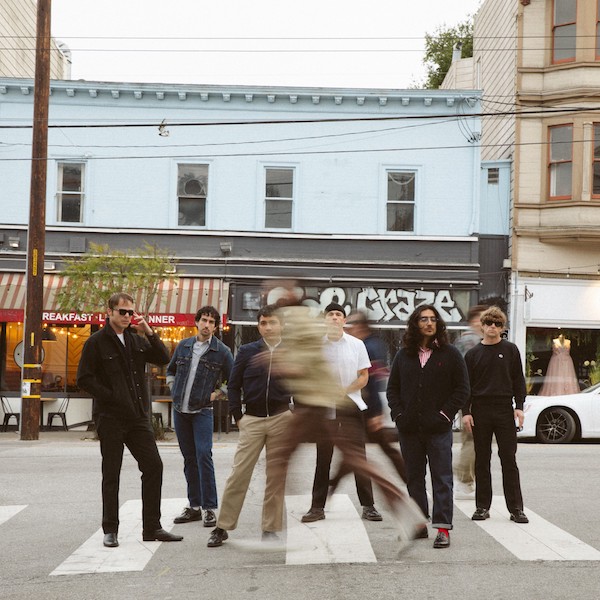
Spiritual Cramp
Spiritual Cramp
Spiritual Cramp aren’t looking for a soapbox. The San Francisco-born punk experimentalists are here to flash a big smile, flip you off, deliver a burst of musical adrenaline, and then keep on walking. “But at the same time, that's something that I'm working on,” vocalist Michael Bingham knowingly grins. And on their upcoming sophomore album, RUDE (due TK via Blue Grape Music), Spiritual Cramp discover a newfound balance between that impish cheekiness, emotional vulnerability, and rabid energy. “When you focus on yourself and the people around you, you can keep your side of the street clean,” Bingham says. “And when I see the opposite of that, I get kind of offended, which is what a lot of these songs are about.”From the very first seconds of RUDE’s opening track “I’m an Anarchist”, Spiritual Cramp make it clear what their side of the street is. The record is framed with the tuning of an FM dial and the voice of DJ Crash (played by percussionist Jose Luna), introducing Wild 87 Radio and the “San Francisco rude boy sound.” The fictitious radio station takes its name from the band’s original moniker prior to renaming themselves after a song by southern California rockers Christian Death, and recurs on the album as a way to keep the band grounded in their SF roots. “My foundation is in San Francisco, California, and from there I can go anywhere and be who I am,” Bingham says. The song that follows the radio intro similarly grounds listeners in the Spiritual Cramp musical language, Bingham delivering tongue-in-cheek sloganeering (“I’m an anarchist, so leave me alone”) over clap-along sunshine punk.While Spiritual Cramp have perfected their kaleidoscopic take on rock over nearly a decade, the gleeful RUDE marks the start of a new era for the band. Bingham and bassist Mike Fenton have been the band’s constants in that time—not to mention having worked on other projects together prior—and wrote the majority of Spiritual Cramp’s songs on their own across a series of lineup changes. But after a seemingly endless tour in support of their self-titled 2023 debut, their new lineup of Bingham, Fenton, percussionist Luna, guitarists Nate Punty and Orville Neeley III, and drummer Julian Smith gelled to the point that the co-founders decided to bring everyone into the room for the writing process. “It really helped give color and energy to the whole record,” Fenton says. The results are nothing short of ecstatic, bounding between new wave burn, indie rock swagger, old-school punk, and even dub and hip-hop flourishes.The thumping rhythm and chunky guitar riffs of album highlight "At My Funeral" showcase that evolved fusion, as well as Bingham’s trademark self-deprecating sense of humor. “At my funeral/ Nobody came/ Everybody knew/ My shit was lame,” he deadpans, as Punty and Neely’s guitars ping-pong to each headphone. The following track, “Automatic”, utilizes similarly muscly, Clash-indebted guitars, though this time pairs a neon dance punk swagger with a Killers-esque soaring chorus.Another major factor in RUDE’s amplified genre experimentation came in the studio, with Spiritual Cramp working with a producer for the first time. After chatting with a few different potential collaborators, the band were passed Grammy-winning producer John Congleton’s information. “I didn’t know if it would be a good fit. I’m a high-intensity guy and he seems pretty mellow,” Bingham says. “I like working with other insane people, but I learned he’s crazy in the studio. When we met he started talking about Stiff Little Fingers, the Stranglers, and Public Enemy, and I know he’s done everything from indie rock to hip-hop. We’re basically a ‘70s punk band inspired by rap, so it was a perfect match.”That collision is exemplified in the giddy, DEVO-addled “Young Offenders”, where pulsing electronics and a stuttery bridge underpin a fist-pumping punk chorus. “Expensive clothes/ Explosive fights/ There’s no better place everything will be just fine/ Just another warm San Francisco night/ Where everyday is the best day of my life,” Bingham rahs, like a sarcastic anthem for yuppie expansion. Throughout RUDE, the tracks feel dense and lush, though always full of light and life. “We got crazy in the studio this time,” Fenton says.Perhaps the wildest surprise, though, comes via guest vocals from a collaborator that might be unexpected for many listeners: Sharon Van Etten. Bingham and his wife became friends with the indie singer-songwriter after their move to Los Angeles, and the unlikely pairing sounds absolutely fated on the slow-burning “You’ve Got My Number”. Bingham and Van Etten trade lines in the smoky verses, building to a thunderous blend of staccato vocals and thumping percussion at the chorus. “You’ve got my number/ But you won’t call me,” they sigh on the deftly heartbroken track, before transforming some wordless “ba da ba” into the musical equivalent of putting on a brave face after a breakup.“People sometimes think of us as ‘just’ a punk band, but we love indie rock and were so honored Sharon would sing on one of our songs,” Bingham says. “For whatever reason I thought a reggae song with a big rock chorus would be perfect for her, and she sounds incredible.” And for the Spiritual Cramp singer, it’s more than just vocal admiration. “I’ve always said I want to be the Sharon Van Etten of punk,” he smiles. “She’s the coolest, and it’s all about doing things thoughtfully and with integrity instead of being some famous celebrity.”Whether it’s on the riotously fun self-loathing anthem “I Hate the Way That I Look” or the delightfully dubby “Violence in the Supermarket”, it’s clear not only that Spiritual Cramp are following that honest artistic path, but they’re doing so by constantly pushing the boundaries of their musical world. “Sometimes we’d write something and everyone in the room would think it was totally nuts,” Fenton laughs. “And then we’d finish it, and it was great to realize we weren’t crazy.” And while they continue evolving, the witty, fun-loving heart of Spiritual Cramp keeps the engine running. “As a band, we have a cool thing that people like, but we can always get better,” Bingham says. “People who listen know where we stand, and this record paints a picture of what it feels like to be in Spiritual Cramp." Modern Nature’s recent records have reflected an insular life. Cooper had moved out to the countryside in 2021 and had, in his words, been “hibernating” while he started a family. He felt this new band was a symbol for his reawakening and the perfect vessel for him to continue to explore themes that he’s sung about with Modern Nature – collectivism, our relationship with the natural world, the weight of consciousness – but with more directness and purpose. The key was the new dual guitar sound.“I’ve always been drawn to bands where two guitarists work as a unit to move around and colour the rhythm section,” explains Cooper. “I’d been listening to the demos Television did with Brian Eno in the day and then that night I played with Tara for the first time at an improvised music show. We have a very similar approach to the guitar and that extends to the way we sing, so it gives the music an interesting balance.“What we do is mirrored; a symmetry on either side of what Jim and Jeff are doing in the rhythm section. We’ve played with lots of amazing musicians who continue to orbit around what we do, but Tara joining the band felt like finding the other side to the square. Previous records have been performed by upwards of fifteen people but it was apparent the four of us could achieve something more powerful and more direct.”In the time Modern Nature has been a band, the world has undoubtedly changed. The words Cooper had been writing previously were somewhat ambiguous but it had started to feel like he was sitting on the fence and that was something he needed to address.“Every day we’re confronted with a confusing and scary world,” he says. “Making music and creating things can feel flippant or unnecessary, but my own world view was defined and influenced by art and artists who weren’t afraid to highlight and offer solutions: Public Enemy, The Smiths or a wider American counterculture.”“The community we’ve built our life around – artists, musicians and the people who gravitate to these things as way of communicating – are struggling to reconcile how they fit into an increasingly cruel world. This album, the themes and the lyrics are directed towards them because I think there are still reasons to be optimistic. There are amazing things happening all around us and it’s up to communities like ours to double down on the things we believe in. It feels as if being part of a group like Modern Nature and making an album that’s open, optimistic and ambitious is in itself part of the solution.”As the new band started to play together more, the energy, excitement and telepathy between them gained momentum and it became clear they needed to make a record that captured that. They locked into a process where they booked a couple of shows, directly followed by four days in the studio (the all-analogue Gizzard Recording in east London). They’d spend two weeks living in each other’s pockets – a very condensed rush of creativity.“It’s rare to hear a recording of a band playing in a room together,” adds Cooper. “And that interaction, the discrepancies in timing, synergy, in pitch, that’s where the magic really is, I think, and that’s what we wanted to capture.”One additional (and slightly unlikely) influence on the record was Andrew Weatherall. Before he passed away, he’d played Modern Nature on his NTS show and Cooper was thrilled that he liked them. He made it an aim to make a record Weatherall might have played to his friends late at night. His motto “Fail we may, sail we must” is what the Can-esque track Pharaoh is about. “It’s difficult to stay aware of the world around you without becoming despondent,” says Cooper. “Pharoah makes the case for finding a personal philosophy and trying to live a life that might inspire others or at the very least not hurt them.”Elsewhere, Radio touches on the contempt capitalism has for the natural world. The line “there’s a fire all around” offers a kind of gallows humour. Cooper adds that recently they played the songs on a day that the news was showing footage of the Los Angeles fires. It occurred to him that it was perhaps an insensitive subject to be singing about but there again – in his words – he feels it’s “important not to turn away from these things.” The same desire not to shy away might also be attributed to Source, which touches on the recent riots in the UK directed towards asylum seekers, inspired by misinformation spread online.For all this wrestling with the grimmer realities of 2025, The Heat Warps is ultimately not a record entirely consumed by anxieties. Its frequently beautiful sounds offer consolation and a wide-eyed optimism amid all the upheaval. Nowhere is that more apparent than on the transcendent album closer, Totality. As Cooper explains: “It was fascinating spending time in America as the country geared up for the 2024 solar eclipse. The news stations covered the event in the same way they’d cover a big football game or the Oscars. Everywhere I went, people were talking about the eclipse and for a few days it really seemed to capture the public’s imagination. “My friend’s dad had organised a huge party and had obviously done his homework. When he was running us through his preparation and how the day was going to go down, he said, ‘We’re hoping for totality,’ and it blew my mind.“The day of the eclipse I was driving through New Mexico and we stopped by the side of the road with hundreds of other people gazing up to the heavens. It felt exciting to be part of something that clearly resonated with people on such a profound level. It’s a fitting album closer and somewhere in there is a philosophy; a romantic nihilism.”And at its heart, right there is the core of Modern Nature’s appeal. Never more so than on this new record. When Modern Nature toured their last album, 2023’s No Fixed Point In Space, it became apparent to Jack Cooper – the band’s main creative force – that they were already pulling away from the free, open-ended approach they had spent five years working towards; almost as if the music had become so abstract and elasticated, it now had to snap back towards something more structured. As they found themselves naturally locking into more fixed grooves, he realised a new direction had been set. Their new album – The Heat Warps – is the triumphant manifestation of where that new direction took them.In the aftermath, Cooper’s songwriting, which had become increasingly impressionistic, found a new focus and the idea of making an album that followed a similar path to the last two increasingly seemed obtuse. The purpose was to forge a radical change. The core trio of him, Jim Wallis (drums) and Jeff Tobias (bass guitar) were augmented by a new guitarist – Tara Cunningham. Modern Nature’s recent records have reflected an insular life. Cooper had moved out to the countryside in 2021 and had, in his words, been “hibernating” while he started a family. He felt this new band was a symbol for his reawakening and the perfect vessel for him to continue to explore themes that he’s sung about with Modern Nature – collectivism, our relationship with the natural world, the weight of consciousness – but with more directness and purpose. The key was the new dual guitar sound.“I’ve always been drawn to bands where two guitarists work as a unit to move around and colour the rhythm section,” explains Cooper. “I’d been listening to the demos Television did with Brian Eno in the day and then that night I played with Tara for the first time at an improvised music show. We have a very similar approach to the guitar and that extends to the way we sing, so it gives the music an interesting balance.“What we do is mirrored; a symmetry on either side of what Jim and Jeff are doing in the rhythm section. We’ve played with lots of amazing musicians who continue to orbit around what we do, but Tara joining the band felt like finding the other side to the square. Previous records have been performed by upwards of fifteen people but it was apparent the four of us could achieve something more powerful and more direct.”In the time Modern Nature has been a band, the world has undoubtedly changed. The words Cooper had been writing previously were somewhat ambiguous but it had started to feel like he was sitting on the fence and that was something he needed to address.“Every day we’re confronted with a confusing and scary world,” he says. “Making music and creating things can feel flippant or unnecessary, but my own world view was defined and influenced by art and artists who weren’t afraid to highlight and offer solutions: Public Enemy, The Smiths or a wider American counterculture.”“The community we’ve built our life around – artists, musicians and the people who gravitate to these things as way of communicating – are struggling to reconcile how they fit into an increasingly cruel world. This album, the themes and the lyrics are directed towards them because I think there are still reasons to be optimistic. There are amazing things happening all around us and it’s up to communities like ours to double down on the things we believe in. It feels as if being part of a group like Modern Nature and making an album that’s open, optimistic and ambitious is in itself part of the solution.”As the new band started to play together more, the energy, excitement and telepathy between them gained momentum and it became clear they needed to make a record that captured that. They locked into a process where they booked a couple of shows, directly followed by four days in the studio (the all-analogue Gizzard Recording in east London). They’d spend two weeks living in each other’s pockets – a very condensed rush of creativity.“It’s rare to hear a recording of a band playing in a room together,” adds Cooper. “And that interaction, the discrepancies in timing, synergy, in pitch, that’s where the magic really is, I think, and that’s what we wanted to capture.”One additional (and slightly unlikely) influence on the record was Andrew Weatherall. Before he passed away, he’d played Modern Nature on his NTS show and Cooper was thrilled that he liked them. He made it an aim to make a record Weatherall might have played to his friends late at night. His motto “Fail we may, sail we must” is what the Can-esque track Pharaoh is about. “It’s difficult to stay aware of the world around you without becoming despondent,” says Cooper. “Pharoah makes the case for finding a personal philosophy and trying to live a life that might inspire others or at the very least not hurt them.”Elsewhere, Radio touches on the contempt capitalism has for the natural world. The line “there’s a fire all around” offers a kind of gallows humour. Cooper adds that recently they played the songs on a day that the news was showing footage of the Los Angeles fires. It occurred to him that it was perhaps an insensitive subject to be singing about but there again – in his words – he feels it’s “important not to turn away from these things.” The same desire not to shy away might also be attributed to Source, which touches on the recent riots in the UK directed towards asylum seekers, inspired by misinformation spread online.For all this wrestling with the grimmer realities of 2025, The Heat Warps is ultimately not a record entirely consumed by anxieties. Its frequently beautiful sounds offer consolation and a wide-eyed optimism amid all the upheaval. Nowhere is that more apparent than on the transcendent album closer, Totality. As Cooper explains: “It was fascinating spending time in America as the country geared up for the 2024 solar eclipse. The news stations covered the event in the same way they’d cover a big football game or the Oscars. Everywhere I went, people were talking about the eclipse and for a few days it really seemed to capture the public’s imagination. “My friend’s dad had organised a huge party and had obviously done his homework. When he was running us through his preparation and how the day was going to go down, he said, ‘We’re hoping for totality,’ and it blew my mind.“The day of the eclipse I was driving through New Mexico and we stopped by the side of the road with hundreds of other people gazing up to the heavens. It felt exciting to be part of something that clearly resonated with people on such a profound level. It’s a fitting album closer and somewhere in there is a philosophy; a romantic nihilism.”And at its heart, right there is the core of Modern Nature’s appeal. Never more so than on this new record.
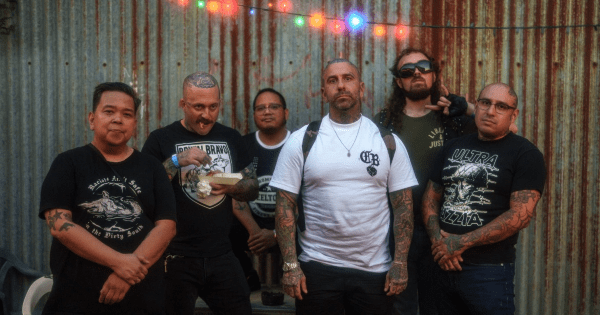
Liberty and Justice
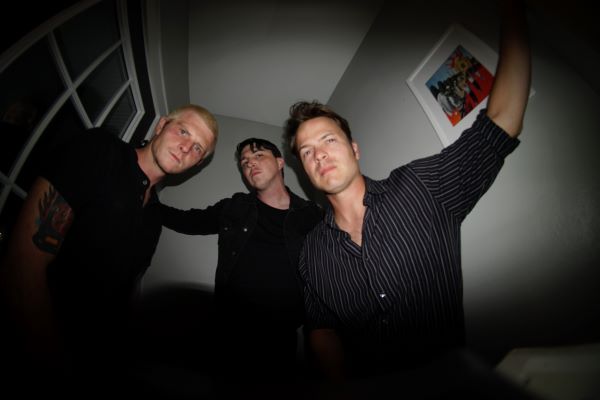
Bad Sports

Antagonizers ATL